

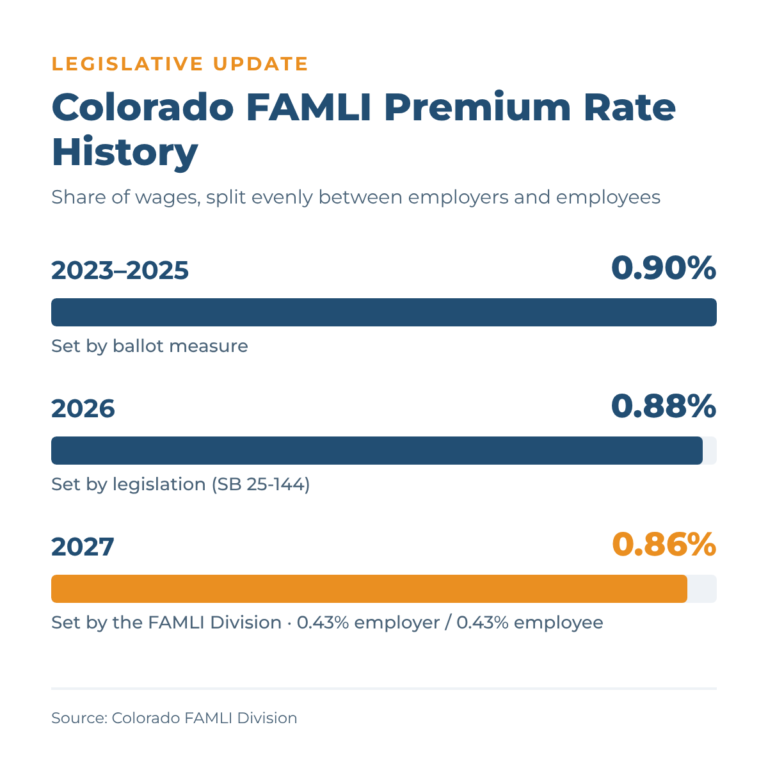
Colorado FAMLI 2027 premiums are going down. On October 6, 2026, Governor Jared Polis, the Colorado Department of Labor and Employment (CDLE) and its Paid Family and Medical Leave Insurance (FAMLI) Division announced that the premium rate will drop from 0.88% in 2026 to 0.86% of wages, effective January 1, 2027.
Here is what changes for 2027, how the premium is split between employers and employees, and which wages it applies to.
Colorado FAMLI 2027 Premium Rate
Starting January 1, 2027, the Colorado FAMLI premium is 0.86% of wages, down from 0.88% in 2026.
How Colorado FAMLI Premiums Have Changed Since 2023
Workers and employers began contributing premiums to the FAMLI insurance fund in 2023. The initial premium rate was set by the ballot measure that created the program and started at 0.9% of wages, split evenly between employers and workers through payroll deductions.
Legislation (SB 25-144) reduced the rate to 0.88% for 2026. The 2027 decrease to 0.86% is the first reduction set administratively by the FAMLI Division, made because of the program’s strong financial position.
Colorado FAMLI 2027 Employer and Employee Premium Split
For 2027, the 0.86% premium is shared equally:
- Employers pay 0.43% of wages.
- Up to 0.43% may be deducted from employee wages.
Small Employer Rule
Employers with fewer than 10 employees nationwide are not required to pay the employer share. They must still collect and remit the employee share, or pay it on the employee’s behalf.
Colorado FAMLI 2027 Wage Cap
The premium rate applies to wages up to the federal Social Security wage base, which is $192,300 for 2027 earnings.
Several other states also have paid leave contribution changes for 2027. See Washington PFML 2027, Massachusetts PFML contribution changes for 2027 and Maryland FAMLI.
This article is for general information only and is not legal or tax advice. Speak with your attorney, CPA or industry professional for guidance on your situation.
Employer Resources
- Employer account and resources: My FAMLI Employer
- Answers to common employer questions: Colorado FAMLI Employer FAQs
Contact Information
For general employer support with the FAMLI program, contact the FAMLI Contact Center:
- Phone: 1-866-CO-FAMLI (1-866-263-2654), Monday through Friday, 7:30 a.m. to 4:30 p.m. Mountain Time
- Email: CDLE_FAMLI_info@state.co.us
Madison Resources is committed to being a dependable partner to your staffing firm by sharing timely updates, promoting operational accuracy, and providing practical resources to help you stay ahead in a constantly evolving compliance landscape.
Explore our website to find more staffing insights. Madison Resources is the premier payroll funding and back office support partner to the staffing industry. Grow with confidence.
Frequently Asked Questions About Colorado PFML 2027
Below are answers to some of the most common questions about Washington PFML 2027.
What Is the Washington PFML 2027 Premium Rate?
The total premium is 1.2% of each employee’s gross wages for wages paid on or after January 1, 2027, up from 1.13% in 2026.
How Is the Paid Leave Premium Split Between Employers and Employees in 2027?
Employers pay 29.3% of the total premium and employees pay 70.7%. Employees pay all of the medical leave portion, and the employer share goes entirely to the family leave portion.
Why Did Washington Change the Premium Split?
2SHB 2345 was passed in response to new IRS guidance on paid leave taxes. Assigning the medical leave portion entirely to employees keeps medical leave benefits from being subject to federal employment taxes.
Do Employers With Fewer Than 50 Employees Pay the Employer Share in 2027?
Not unless they choose to. They must still collect the employee premium or pay it on employees’ behalf.
What Is the 2027 Wage Cap for Washington Paid Leave Premiums?
$192,300, the 2027 Social Security wage base. Premium collection stops at the cap, but all wages must still be reported.
Can the 2027 Rate Be Withheld Retroactively?
No. The new rate applies only to wages paid on or after January 1, 2027, and premiums cannot be withheld from employees retroactively.